Tufte’s theory of layering and separation suggests that layering visual components can organise data by separating the important parts of information in a graphic (Tufte, 1990, pp.53-67). In this blog post I will be discussing the use of layering and separation in magazine examples.
Magazines rely heavily on the use of layering visual components to separate data. Shumi Perhiniak suggests that a key aspect of magazine design is the creation of a hierarchy of information: ‘Do the right pieces of information stand out? Establish what is the most/ least important information for a viewer… indicate the levels of priority visually.’ (Shumi Perhiniak, 2020).
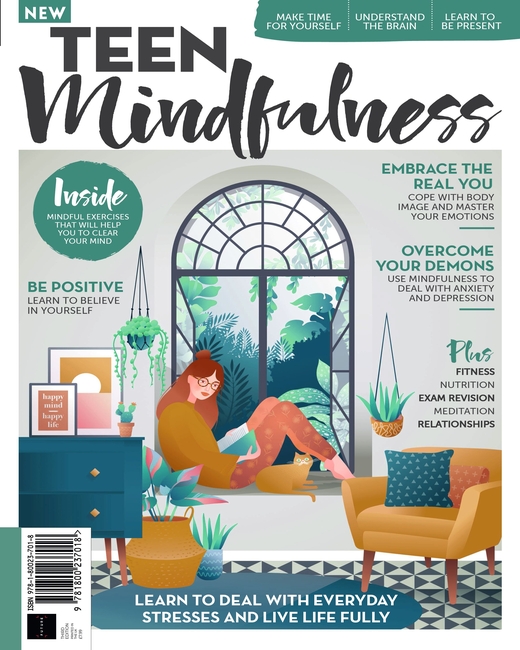
In this example taken from the teenage mental health magazine ‘Teen Mindfulness’, layers of text and visuals are used to create an effective graphic. The circular sticker in the top left is the perfect example of a layer being used to distinguish a piece of information that is important to the viewer. There is very clearly a visual hierarchy here, the illustration is the thing that catches the viewers eye and the pieces of text and shape that are layered on top to display the most important pieces of information regarding the contents in the magazine.
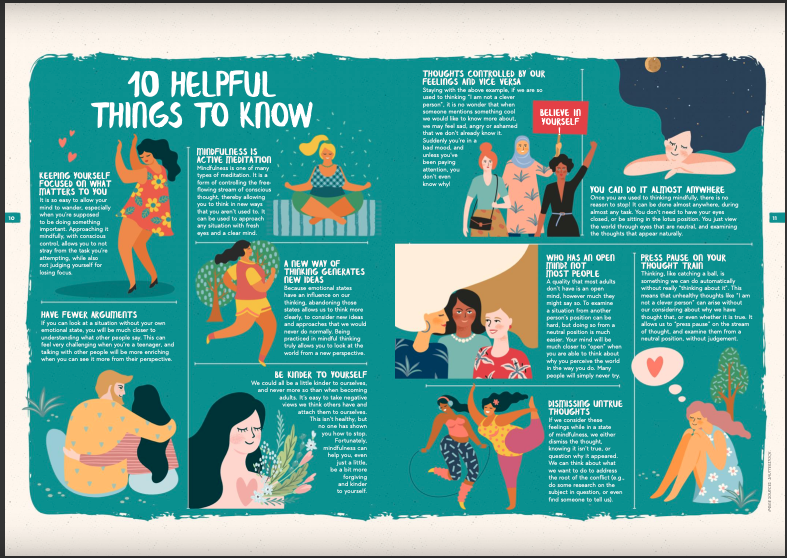
This is an example from the same magazine in which the designer has chosen to separate chunks of text with simple white borders and small illustrations. This is very effective as it allows the data to be separated and easier for the viewer to comprehend. One could also say that there is a clear hierarchy of visuals here as the page is prefaced by a title that introduces the data and subtitles for each point.
References:
Magazines Direct, 2021. Buy Teen Mindfulness third edition. (Online purchase) [Online] (Updated 7 October 2021) Available at: https://www.magazinesdirect.com/az-magazines/49795702/teen-mindfulness-3rd-edition.thtml [Accessed 10 November 2021]
Shumi Perhiniak, 2020. Anatomy of a Magazine Layout (Article) [Online] (Updated 6 July 2020) Available at: https://yesimadesigner.com/anatomy-of-a-magazine-layout/ [Accessed 10 November 2021]
Tufte, E.R., 1990. Envisioning Information. Cheshire (CT): Graphics Press.